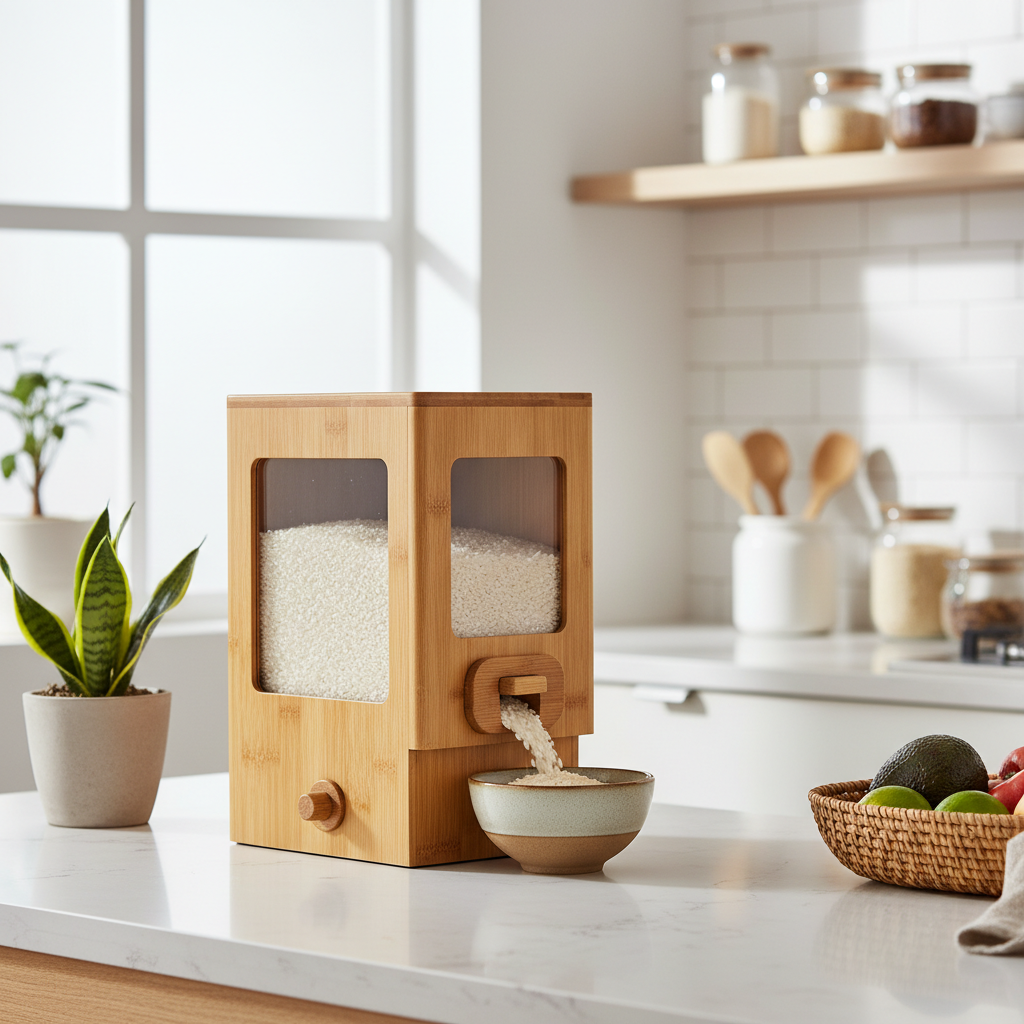
Have you ever considered that the secret to perfectly fresh rice might lie in tradition? In Japanese culinary culture, the humble wooden rice box, known as a Kome Bitsu, is far more than a mere container. It’s a testament to ancient wisdom and expert craftsmanship, designed to keep your uncooked rice in its prime condition. For those who cherish quality and tradition in their kitchen, a Kome Bitsu offers unparalleled benefits over modern alternatives, ensuring every grain remains as delightful as nature intended.
The Enduring Appeal of Wooden Rice Boxes (Kome Bitsu): A Tradition Reimagined
A Kome Bitsu is a traditional Japanese storage container specifically crafted for uncooked rice. Unlike plastic bins or automated dispensers, these wooden boxes are designed with a deep understanding of rice’s needs, creating an optimal microclimate that preserves its freshness, flavor, and texture. While “Ohitsu” are similar wooden containers used for serving and keeping cooked rice warm and fluffy, the Kome Bitsu is dedicated to safeguarding your pantry staples before they ever hit the pot.
For centuries, Japanese households have relied on these meticulously crafted boxes, recognizing that the right storage can significantly impact the final taste of a meal. Embracing a Kome Bitsu is not just about utility; it’s about connecting with a rich culinary heritage, bringing a piece of timeless elegance and functional art into your home.
Why Paulownia Wood is the Perfect Choice for Kome Bitsu
The magic behind the Kome Bitsu lies predominantly in its material: Paulownia wood, often referred to as Kiri wood. This particular wood species is revered in Japan for its exceptional properties, making it an ideal medium for rice preservation.
Paulownia wood possesses natural moisture-regulating capabilities. In humid environments, it gently absorbs excess moisture, preventing mold growth and keeping the rice dry. Conversely, in drier conditions, it releases a subtle amount of moisture, stopping the rice from becoming brittle. This innate ability to maintain a stable humidity level around the rice is crucial for preventing spoilage and retaining the grain’s natural integrity. Furthermore, Paulownia wood is naturally resistant to insects, offering a chemical-free defense against common pantry pests. Its lightweight nature makes these boxes surprisingly easy to handle, despite their solid construction. Best of all, Paulownia wood is odorless, ensuring that no unwanted scents are imparted to your precious rice, allowing its natural aroma to shine through when cooked.
Key Features to Look for in a Traditional Wooden Rice Box
When choosing a Kome Bitsu, several features highlight its quality, functionality, and adherence to traditional craftsmanship.
Material and Craftsmanship
|
Our Picks for the Best Rice dispenser in 2026
As an Amazon Associate I earn from qualifying purchases.
|
||
| Num | Product | Action |
|---|---|---|
| 1 | Mity rain Rice Dispenser 20 Lbs with Moisture Absorbing Clay, Rice Storage Container with Measuring Cup, 12 L Cereal Containers Storage Airtight for Kitchen Pantry Organization |

|
| 2 | Sooyee 22 Lbs Rice Dispenser with Measuring Cup,Large Food Storage Containers for Rice, Corn,Soybean & Oatmeal,Airtight, Moisture Proof |
|
| 3 | Aroma Housewares 27lbs Large Rice Dispenser, 7.25 x 16.5 x 16.5 inches, White |
|
| 4 | Lifewit Rice Dispenser 25 Lbs(11.3kg), Rice Storage Container Sealed Moisture Proof with Measuring Cup for Kitchen Pantry Household, BPA-Free, 1 Pack Pink |
|
| 5 | Lifewit Rice Dispenser 25 Lbs(11.3kg), Rice Storage Container Sealed Moisture Proof with Measuring Cup for Kitchen Pantry Household, BPA-Free, 1 Pack Clear |
|
| 6 | Rice Dispenser, Rice Storage Container with Measuring Cup for Kitchen Pantry Household, Dry Food Storage Containers Airtight, Sealed Moisture Proof, Cream White 11 Lbs |
|
| 7 | Rice Dispenser, Slim Rice Storage Container for Small Space, BPA-Free Clear Dry Food Dispenser Sealed Moisture Proof, Grain Storage Bucket for Kitchen Pantry Household (Green11Lbs) |
|
| 8 | Large Rice Dispenser 25Lbs, Cereal Dispenser Rice Container Food Storage Container with Measuring Cup, Cereal Containers Storage Kitchen Storage Household Rice Pet Food Holder (25LBS) |
|
| 9 | LUOKER Rice Dispenser,25 Lbs Rice Storage with Measuring Cup,White&Green Rice Container with One-Touch,Cereal Dispenser Storage with Lids for Rice, Corn,Soybean & Oatmeal,Airtight, Moisture Proof |
|
| 10 | Lenwi 22-25 Lbs Rice Dispenser, Large Cereal Dry Food Storage Containers with Measuring Cup,BPA-Free Household for Kitchen Pantry Organization-Grey |
|
The most authentic Kome Bitsu are made from high-quality Paulownia wood, often crafted using the “Kiribako” technique. This traditional Japanese art involves precise joinery, typically without nails or glue, showcasing the artisan’s skill and ensuring a tight, robust construction. Look for boxes that emphasize their handmade origin and the expertise of local woodworkers, such as those from Masuda Kiribako in Fukuoka Prefecture or Kiso woodworking craftsmen. This attention to detail guarantees a product built to last and perform its function beautifully.
Capacity
Kome Bitsu come in various capacities to suit different household needs. Common sizes include 3kg (approximately 6.6 lbs), 5kg (11 lbs), and larger options. When selecting a size, consider your family’s rice consumption and how frequently you purchase new stock. A larger capacity might be suitable for bigger families or those who buy rice in bulk, while a smaller one is perfect for single individuals or couples who prefer to replenish their supply more often, ensuring peak freshness.
Design and Functionality
While deeply traditional, many modern Kome Bitsu incorporate thoughtful design elements. Lids often feature tight seals to protect the rice further. Some designs maintain a classic solid wood lid, while others may integrate an acrylic transparent panel, allowing you to quickly check rice levels without opening the box. Many traditional Kome Bitsu also come with a “masu,” a small wooden measuring cup, often with a magnetic attachment to the lid for convenient storage. Ease of cleaning and overall durability are also important considerations, ensuring your Kome Bitsu remains a cherished kitchen item for years.
Choosing Your Ideal Kome Bitsu: A Buyer’s Guide
Investing in a Kome Bitsu is a decision that blends practicality with an appreciation for tradition. To make an informed choice, consider these steps:
Research Reputable Artisans and Brands: Seek out manufacturers or workshops known for their dedication to traditional Japanese woodworking, particularly those specializing in Paulownia wood. Their expertise often ensures superior quality and authenticity.
Consider Your Budget: The price of a Kome Bitsu can vary significantly based on craftsmanship, size, and brand reputation. While mass-produced versions might be more affordable, a handmade box from a renowned artisan represents a long-term investment in quality and heritage.
Prioritize Authenticity: Ensure the product is genuinely made in Japan and specifies Paulownia wood. This guarantees you are receiving a product with the traditional properties and craftsmanship that make a Kome Bitsu so effective.
Read Reviews and Descriptions Carefully: Look for details on construction methods, materials, and care instructions to confirm the product meets your expectations for quality and traditional design.
Maximizing Longevity: Care and Maintenance Tips for Your Wooden Rice Box
Proper care will ensure your Kome Bitsu remains an effective and beautiful storage solution for generations.
- Gentle Cleaning: Avoid harsh detergents, dishwashers, or soaking your Kome Bitsu in water. Instead, gently wipe the interior and exterior with a dry cloth or a slightly damp cloth (then immediately dry) to remove any dust or rice residue.
- Optimal Storage Location: Keep your Kome Bitsu in a cool, dry place, away from direct sunlight, extreme temperature fluctuations, or high humidity, which could affect the wood.
- Avoid Extreme Conditions: Never place your wooden rice box in an oven, microwave, or refrigerator. These environments can warp, crack, or otherwise damage the natural wood.
- Regular Use: Using your Kome Bitsu regularly and ensuring it is always filled with fresh rice can actually help maintain the wood’s condition and its moisture-regulating properties.
“The true beauty of a Kome Bitsu lies in its harmonious blend of form and function, a centuries-old design that truly respects the rice it holds.” – Akira Tanaka, Master Woodworker specializing in Kiribako
Conclusion
The traditional wooden rice box, or Kome Bitsu, is a testament to the enduring value of natural materials and masterful craftsmanship in the modern kitchen. With its superior moisture regulation and natural insect-repellent properties, Paulownia wood offers an unparalleled environment for keeping your uncooked rice fresh, fragrant, and ready for your next culinary creation. By choosing a Kome Bitsu, you not only invest in a high-quality storage solution but also embrace a piece of Japanese heritage, elevating an everyday staple into an art form. It’s a choice that reflects an appreciation for tradition, quality, and the simple pleasure of perfectly preserved rice.
Are you ready to experience the difference a traditional Kome Bitsu can make in your kitchen?
Frequently Asked Questions
Why should I choose a wooden rice box over a plastic one?
Wooden rice boxes, particularly those made from Paulownia wood, offer natural moisture regulation, which prevents mold and keeps rice fresh. They also possess natural insect-repellent properties and do not impart any plastic odors, preserving the rice’s pure flavor, unlike many plastic containers.
How does Paulownia wood keep rice fresh?
Paulownia wood has a unique cellular structure that allows it to absorb moisture when the air is humid and release it when the air is dry. This natural “breathing” action maintains a consistent microclimate inside the box, crucial for preventing rice from drying out or becoming damp and susceptible to spoilage.
What is the ideal capacity for a Kome Bitsu?
The ideal capacity depends on your household size and rice consumption habits. For small households, a 3kg or 5kg Kome Bitsu might be sufficient, while larger families or those who buy rice in bulk may prefer a 10kg or 15kg size. Consider how much rice you typically store and use within a few weeks.
How do I clean and maintain my wooden rice box?
To clean a Kome Bitsu, simply wipe it with a dry or very lightly damp cloth. Avoid using harsh detergents, immersing it in water, or placing it in a dishwasher, microwave, oven, or refrigerator, as these can damage the wood. Store it in a cool, dry place away from direct sunlight.
What is the difference between a Kome Bitsu and an Ohitsu?
A Kome Bitsu is a traditional wooden box designed for storing uncooked rice, typically made from Paulownia wood. An Ohitsu, on the other hand, is a wooden container, often made from Hinoki cypress or cedar, used for holding and serving cooked rice, keeping it warm, fluffy, and absorbing excess moisture after it’s been prepared.