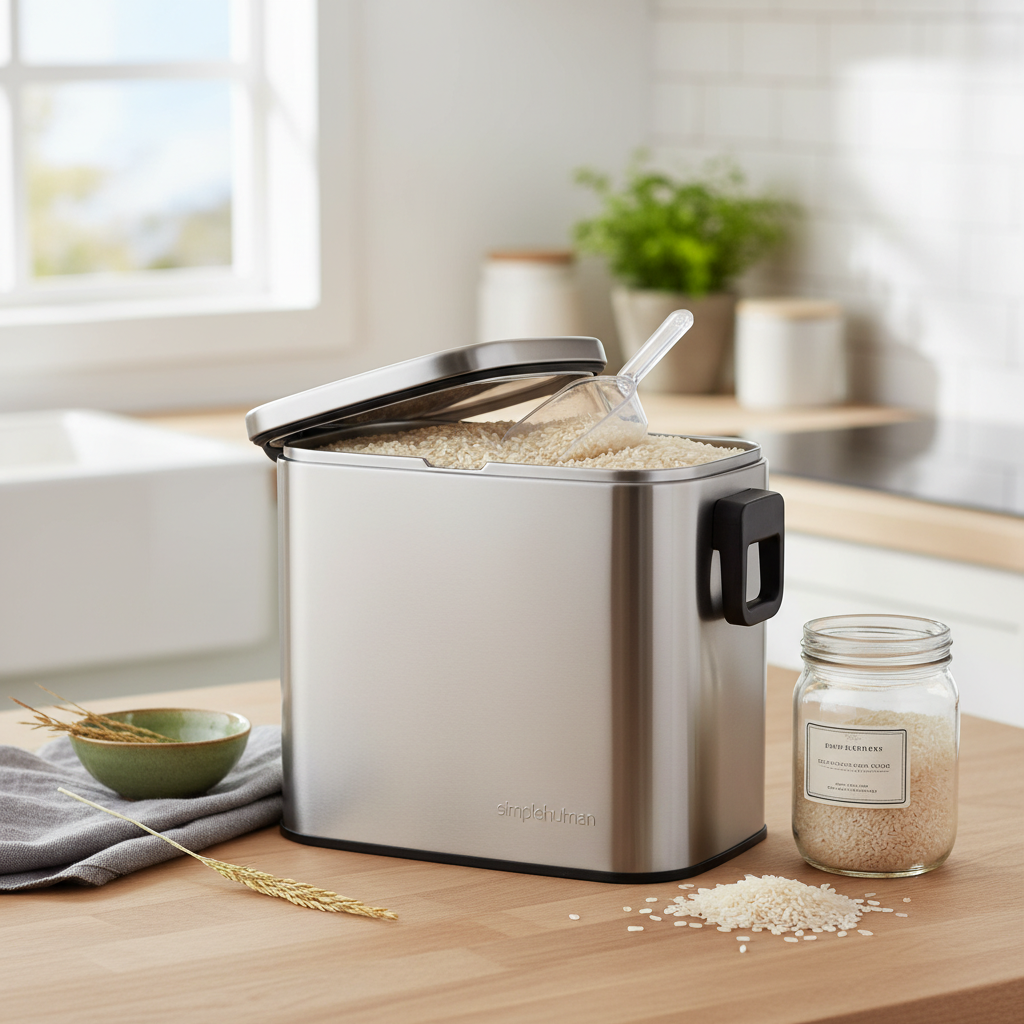
Imagine opening your rice bin, only to discover clumps, a musty odor, or even signs of unwelcome guests. Moisture is the silent enemy of stored grains, leading to spoilage, mold, and reduced shelf life. But what if you could easily safeguard your staple food with a simple, homemade solution? Crafting your own desiccant pack for your rice bin is an incredibly effective and cost-efficient way to combat humidity, ensuring your rice remains dry, fresh, and ready for your next culinary creation.
Understanding Moisture’s Threat to Your Rice Supply
Moisture poses a significant threat to the longevity and quality of stored rice. Even in seemingly dry environments, ambient humidity can permeate containers, creating a breeding ground for problems. Excess moisture encourages the growth of mold and mildew, which not only spoil the rice but can also produce harmful toxins. Furthermore, it attracts pantry pests like weevils, leading to contamination. Clumping, staleness, and a compromised flavor are all common indicators that moisture has infiltrated your rice, diminishing its quality and rendering it undesirable for consumption. By actively managing humidity, you protect your investment and preserve the nutritional value and taste of your rice.
Choosing the Perfect DIY Desiccant Material
Selecting the right material for your DIY desiccant pack is crucial for both effectiveness and food safety. While several options can absorb moisture, not all are suitable for direct or indirect contact with food.
Food-Grade Silica Gel: The Gold Standard
Food-grade silica gel stands out as the most recommended material for desiccant packs intended for food storage. This non-toxic, amorphous form of silica is FDA-approved for use with food and pharmaceutical items, making it a safe choice for your rice bin [cite: 1, 3 – best desiccant search]. It boasts an impressive absorption capacity, capable of holding up to 40% of its weight in water, and remains dry to the touch even when saturated [cite: 5 – best desiccant search, 3 – is silica gel safe search].
- Pros: Highly effective, reusable, FDA-approved, non-toxic, does not alter food flavor or smell.
- Cons: Requires initial purchase; essential to verify it is explicitly “food-grade” and not industrial-grade silica gel which may contain toxic indicating agents like cobalt chloride [cite: 1, 3 – is silica gel safe search].
|
Our Picks for the Best Rice dispenser in 2026
As an Amazon Associate I earn from qualifying purchases.
|
||
| Num | Product | Action |
|---|---|---|
| 1 | LUOKER Rice Dispenser,25 Lbs Rice Storage with Measuring Cup,White&Green Rice Container with One-Touch,Cereal Dispenser Storage with Lids for Rice, Corn,Soybean & Oatmeal,Airtight, Moisture Proof |

|
| 2 | Lenwi 22-25 Lbs Rice Dispenser, Large Cereal Dry Food Storage Containers with Measuring Cup,BPA-Free Household for Kitchen Pantry Organization-Grey |
|
| 3 | Aroma Housewares 27lbs Large Rice Dispenser, 7.25 x 16.5 x 16.5 inches, White |
|
| 4 | Large Rice Dispenser 25Lbs, Cereal Dispenser Rice Container Food Storage Container with Measuring Cup, Cereal Containers Storage Kitchen Storage Household Rice Pet Food Holder (25LBS) |
|
| 5 | Mity rain Rice Dispenser 20 Lbs with Moisture Absorbing Clay, Rice Storage Container with Measuring Cup, 12 L Cereal Containers Storage Airtight for Kitchen Pantry Organization |
|
| 6 | Rice Dispenser, Rice Storage Container with Measuring Cup for Kitchen Pantry Household, Dry Food Storage Containers Airtight, Sealed Moisture Proof, Cream White 11 Lbs |
|
| 7 | Rice Dispenser, Slim Rice Storage Container for Small Space, BPA-Free Clear Dry Food Dispenser Sealed Moisture Proof, Grain Storage Bucket for Kitchen Pantry Household (Green11Lbs) |
|
| 8 | Sooyee 22 Lbs Rice Dispenser with Measuring Cup,Large Food Storage Containers for Rice, Corn,Soybean & Oatmeal,Airtight, Moisture Proof |
|
| 9 | Lifewit Rice Dispenser 25 Lbs(11.3kg), Rice Storage Container Sealed Moisture Proof with Measuring Cup for Kitchen Pantry Household, BPA-Free, 1 Pack Pink |
|
| 10 | Lifewit Rice Dispenser 25 Lbs(11.3kg), Rice Storage Container Sealed Moisture Proof with Measuring Cup for Kitchen Pantry Household, BPA-Free, 1 Pack Clear |
|
Natural Alternatives (with considerations)
For those seeking readily available or natural options, several household items can serve as desiccants, though they come with specific caveats:
- White Rice: Surprisingly, plain white rice itself can act as a desiccant, being more absorbent than brown rice. It’s often seen in salt shakers to prevent clumping. However, caution is advised as rice can attract rodents if not contained within a securely sealed pouch inside an airtight bin [cite: 2 – how to DIY search, 3 – how to DIY search].
- Salt: Kosher or pickling salt can absorb moisture effectively. To prevent clumping, some sources suggest adding a small amount of calcium silicate. Like rice, salt is reusable once dried out [cite: 2 – how to DIY search].
- Activated Charcoal: Known for its excellent absorption properties and ability to neutralize odors, activated charcoal is a good option for grains and seeds. Ensure you use food-grade activated charcoal to prevent contamination [cite: 3 – is silica gel safe search].
- Baking Soda: A common pantry item, baking soda can absorb moisture and odors, making it a decent, readily available option for a DIY desiccant pack [cite: 2 – how to DIY search].
- Bentonite Clay: This is another food-safe, non-toxic clay that is highly effective for long-term food storage and is recognized as GRAS (Generally Recognized As Safe) by the FDA [cite: 2 – best desiccant search].
Materials to Strictly Avoid
Never use non-food-grade silica gel, especially those with color-changing indicators (often blue turning pink), as these typically contain cobalt chloride, which is toxic [cite: 1, 3 – is silica gel safe search]. Also, steer clear of scented cat litter or any chemical desiccants not explicitly labeled as food-safe, as they can taint your rice with harmful substances or unwanted odors.
Crafting Your DIY Desiccant Pack: A Step-by-Step Guide
Making your own desiccant pack is a straightforward process, requiring minimal supplies and effort.
Materials You’ll Need:
- Your chosen desiccant material: Food-grade silica gel beads (available online or at craft stores, often in the floral department for drying flowers [cite: 1 – how to DIY search]), white rice, kosher salt, or food-grade activated charcoal.
- Small, breathable fabric: Cotton fabric scraps, muslin bags, or even coffee filters work well. The material must be tightly woven enough to contain the desiccant but porous enough to allow moisture absorption.
- Sewing supplies or stapler: Needle and thread, a sewing machine, or a stapler for securing the pouch.
Step-by-Step Instructions:
- Prepare your fabric: If using fabric scraps, cut a square or rectangle. For a pouch, fold the fabric in half and sew or staple three sides together, leaving one side open. If using a coffee filter, you can simply fold it into a packet shape.
- Fill the pouch: Carefully spoon or pour your chosen desiccant material into the fabric pouch. For silica gel, a tablespoon or two is often sufficient for a small pack. For rice or salt, you might use a few tablespoons, depending on the desired size and your rice bin’s capacity. Ensure there’s enough space to seal the top.
- Seal the pack:
- Sewn pouch: Fold over the open edge and sew it closed to create a secure packet.
- Coffee filter: Fold the edges over multiple times, then staple them securely. Three to four staples usually suffice [cite: 4 – how to DIY search]. The key is to ensure no desiccant material can escape into your rice.
- Ready for action: Your DIY desiccant pack is now ready to be placed in your rice bin!
Factors for Effective Desiccant Use
Maximizing the effectiveness of your DIY desiccant packs involves more than just crafting them. Consider these key factors:
Airtight Containers are Paramount
A desiccant pack works best when placed inside an airtight container. This limits the amount of new moisture entering the bin, allowing the desiccant to focus on absorbing the humidity already present and any minimal ingress. Without an airtight seal, your desiccant will quickly become saturated, rendering it ineffective.
Determining Desiccant Quantity
The amount of desiccant needed depends on the size of your rice bin and the ambient humidity levels. For general home use, a few small packs for a standard 10-20 lb rice bin might suffice. If you live in a particularly humid climate or store larger quantities of rice, you may need more or larger packs. It’s better to start with a moderate amount and add more if you notice signs of moisture returning.
Strategic Placement
Place your desiccant pack(s) directly within the rice bin. You can bury it slightly within the rice or place it near the top. If you also use oxygen absorbers for long-term storage, remember they are not “friends” with desiccants. Oxygen absorbers require a small amount of moisture to function, so position them at opposite ends of the container to prevent the desiccant from prematurely drawing out the necessary moisture [cite: 2 – best desiccant search].
Reactivating and Maintaining Your Desiccant Packs
One of the great advantages of many DIY desiccant materials, especially silica gel, is their reusability.
Knowing When to Reactivate
For indicating silica gel (though not food-safe for direct contact), a color change signals saturation. For non-indicating silica gel or other DIY materials, you’ll need to observe. Silica gel beads may feel less “slippery” or appear slightly duller when saturated. A simpler method is to periodically check your rice for any signs of clumping or moisture. If you notice these, it’s time to reactivate your packs.
Reactivation Methods:
- Sun Drying: For a gentle and energy-free method, simply place your desiccant packs in direct sunlight for a day or two. The sun’s heat will drive off the absorbed moisture, rejuvenating the material [cite: 1 – how to DIY search].
- Oven Drying: For a quicker method, spread the desiccant material (silica gel, salt, or charcoal) on a baking sheet. Place it in an oven set to the lowest temperature (around 200-250°F or 90-120°C) for 2-5 hours, or until thoroughly dry [cite: 1 – how to DIY search]. Crucial safety note: If you’re reactivating commercial silica gel packets, cut them open and pour out the gel onto the baking sheet. Baking the entire packet can cause the packet material to catch fire [cite: 1 – how to DIY search]. Always allow the material to cool completely before returning it to its fabric pouch.
When to Replace
While reusable, desiccants do not last indefinitely. Over time, their absorption capacity may diminish. If you find your reactivated packs are becoming saturated too quickly, or your rice consistently shows signs of moisture despite using them, it may be time to replace your desiccant material with a fresh batch.
“Effective moisture control is the unsung hero of dry food storage. A well-maintained desiccant pack is a small effort with a massive return in preserving freshness.” – Admin, reviewaol.com, Home Appliance Technician
Integrating DIY Desiccant Packs for Optimal Rice Storage
To achieve the best results, integrate your DIY desiccant packs into a comprehensive rice storage strategy. Always store your rice in a cool, dark, and dry place, away from direct sunlight and heat sources. Pair your desiccant packs with truly airtight containers made from food-grade plastic or glass. Regularly inspect your rice and desiccant packs, making reactivation or replacement a routine part of your pantry maintenance. This holistic approach ensures your rice remains in prime condition for extended periods.
Conclusion
Crafting your own desiccant pack for your rice bin is a straightforward yet powerful step towards ensuring your rice stays perfectly dry and fresh. By understanding the common threats of moisture and selecting the right food-safe materials, you can easily create effective, reusable moisture absorbers. From the robust performance of food-grade silica gel to natural alternatives like rice or salt, there’s a DIY solution for every household. Embrace these simple techniques to keep your grains in optimal condition, free from mold, pests, and staleness. What steps will you take today to secure your rice supply against the unseen enemy of moisture?
Frequently Asked Questions
Can I use the small silica gel packets that come with shoes for my rice bin?
No, it is generally not recommended to use silica gel packets from non-food items like shoes. These are often not food-grade and may contain toxic indicating chemicals like cobalt chloride, which are unsafe for food contact. Always opt for explicitly labeled food-grade silica gel.
How often should I reactivate my DIY desiccant packs?
The frequency of reactivation depends on your local humidity, the size of your rice bin, and the amount of desiccant. A good rule of thumb is to check every 1-3 months, or sooner if you notice any signs of moisture returning in your rice, such as clumping.
Is it safe if a few silica gel beads accidentally get into my rice?
While food-grade silica gel is non-toxic, consuming the beads themselves is not intended and could pose a choking hazard or cause mild digestive upset. It’s crucial to ensure your desiccant packs are securely sealed to prevent any beads from escaping into your rice.
Can other dry goods benefit from DIY desiccant packs?
Absolutely! DIY desiccant packs are excellent for a wide range of dry goods beyond rice, including flour, sugar, pasta, dried beans, spices, and even pet food. They help prevent clumping, preserve freshness, and deter mold growth in any moisture-sensitive pantry item.
What are the signs that my desiccant pack is no longer effective?
If your desiccant pack feels heavy or if your rice starts to show signs of moisture, such as clumping, a change in texture, or a musty smell, it indicates that your desiccant pack is saturated and needs reactivation or replacement.