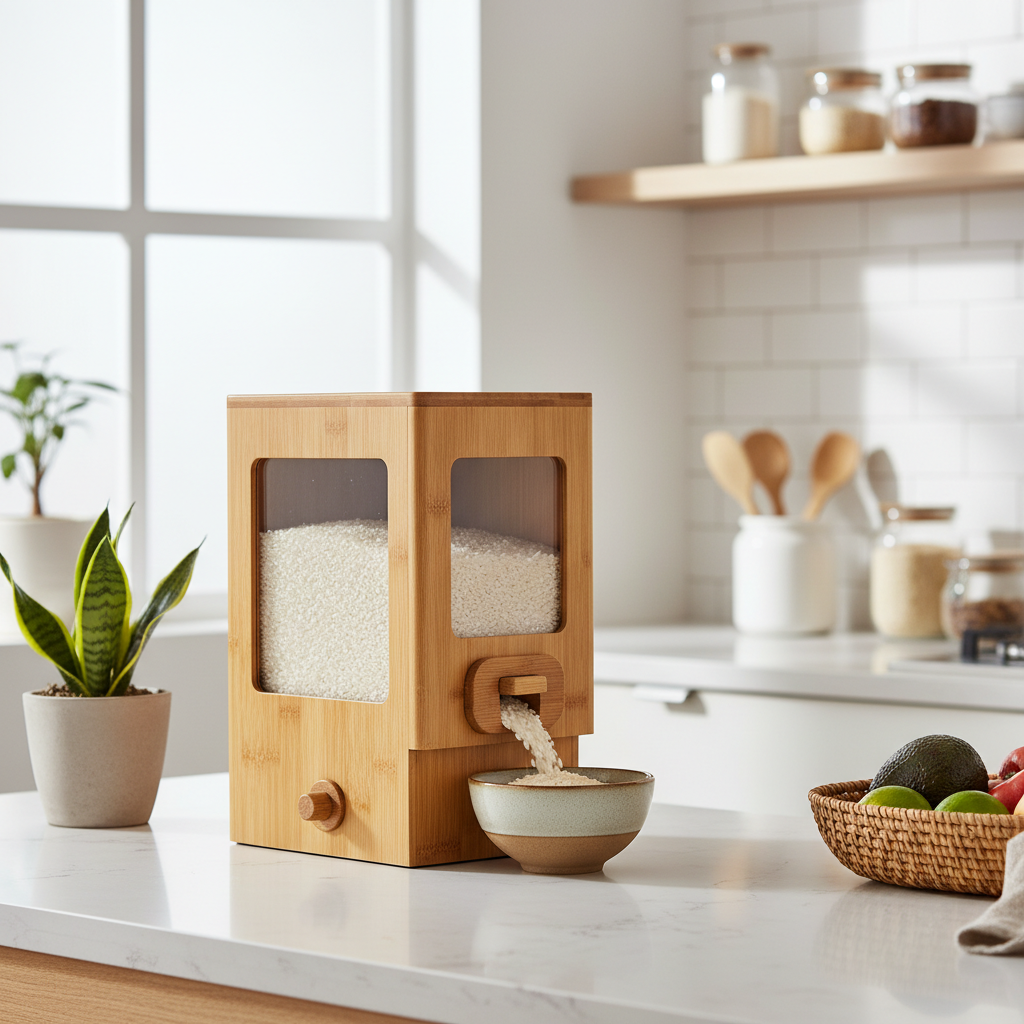
Cooking rice might seem like a straightforward task, but the method you use to measure and store this staple grain can significantly impact your kitchen’s efficiency, the rice’s freshness, and even your peace of mind. For generations, home cooks have relied on the simple measuring cup and a scoop, pulling rice directly from a bag or container. However, a modern contender, the lever rice dispenser, has emerged, promising enhanced convenience and superior storage. So, which method truly stands out for your culinary space?
This article delves into a comprehensive comparison between the traditional cup scooping method and the innovative lever rice dispenser. We’ll explore the distinct advantages and disadvantages of each, examining factors like precision, hygiene, convenience, and cost, to help you determine the ideal rice handling solution for your household.
The Traditional Approach: Cup Scooping
For many, the image of scooping rice from a large bag or container with a measuring cup is synonymous with home cooking. This method is undeniably simple and accessible, requiring minimal upfront investment beyond basic kitchen tools.
Simplicity and Accessibility
|
Our Picks for the Best Rice dispenser in 2026
As an Amazon Associate I earn from qualifying purchases.
|
||
| Num | Product | Action |
|---|---|---|
| 1 | Lifewit Rice Dispenser 25 Lbs(11.3kg), Rice Storage Container Sealed Moisture Proof with Measuring Cup for Kitchen Pantry Household, BPA-Free, 1 Pack Clear |

|
| 2 | Lenwi 22-25 Lbs Rice Dispenser, Large Cereal Dry Food Storage Containers with Measuring Cup,BPA-Free Household for Kitchen Pantry Organization-Grey |
|
| 3 | Lifewit Rice Dispenser 25 Lbs(11.3kg), Rice Storage Container Sealed Moisture Proof with Measuring Cup for Kitchen Pantry Household, BPA-Free, 1 Pack Pink |
|
| 4 | LUOKER Rice Dispenser,25 Lbs Rice Storage with Measuring Cup,White&Green Rice Container with One-Touch,Cereal Dispenser Storage with Lids for Rice, Corn,Soybean & Oatmeal,Airtight, Moisture Proof |
|
| 5 | Rice Dispenser, Rice Storage Container with Measuring Cup for Kitchen Pantry Household, Dry Food Storage Containers Airtight, Sealed Moisture Proof, Cream White 11 Lbs |
|
| 6 | Large Rice Dispenser 25Lbs, Cereal Dispenser Rice Container Food Storage Container with Measuring Cup, Cereal Containers Storage Kitchen Storage Household Rice Pet Food Holder (25LBS) |
|
| 7 | Aroma Housewares 27lbs Large Rice Dispenser, 7.25 x 16.5 x 16.5 inches, White |
|
| 8 | Mity rain Rice Dispenser 20 Lbs with Moisture Absorbing Clay, Rice Storage Container with Measuring Cup, 12 L Cereal Containers Storage Airtight for Kitchen Pantry Organization |
|
| 9 | Rice Dispenser, Slim Rice Storage Container for Small Space, BPA-Free Clear Dry Food Dispenser Sealed Moisture Proof, Grain Storage Bucket for Kitchen Pantry Household (Green11Lbs) |
|
| 10 | Sooyee 22 Lbs Rice Dispenser with Measuring Cup,Large Food Storage Containers for Rice, Corn,Soybean & Oatmeal,Airtight, Moisture Proof |
|
The primary appeal of cup scooping lies in its straightforward nature. Most kitchens are already equipped with a measuring cup and a suitable container, making it an immediately available and cost-free option. There are no intricate mechanisms to learn or maintain, and it offers immediate flexibility for adjusting portions as needed without relying on a fixed dispensing system.
Potential Drawbacks
While traditional, cup scooping comes with several notable disadvantages that can affect the quality of your rice and your kitchen environment.
- Hygiene Concerns: Storing rice in open bags or containers exposes it to ambient air, moisture, dust, and potential pests. This exposure can lead to faster spoilage, absorption of odors, and a greater risk of contamination.
- Inconsistent Portions: Manual scooping can result in slight variations in portion sizes, which can impact the water-to-rice ratio and ultimately affect the texture and consistency of your cooked rice. Achieving perfect rice often relies on precise measurements, a challenge with freehand scooping.
- Mess and Spills: Scooping rice, especially from large, unwieldy bags, often leads to spills and scattered grains on countertops or pantry shelves. This not only creates extra cleanup but also results in wasted food.
- Storage Issues: Keeping rice in its original bag or a loosely sealed container can contribute to kitchen clutter. Furthermore, without a “first-in, first-out” (FIFO) system, older rice may linger at the bottom of the container, potentially compromising freshness over time.
- Pest Vulnerability: Open or poorly sealed storage makes your rice an easy target for common pantry pests like weevils, leading to potential infestation and food waste.
The Modern Solution: Lever Rice Dispensers
Lever rice dispensers offer a contemporary alternative, designed to address many of the challenges associated with traditional rice storage and measurement. These devices come in various forms, but their core function is to provide an efficient and hygienic way to dispense rice.
Types of Rice Dispensers
Rice dispensers generally fall into a few categories based on their operation:
- Manual (Lever/Button): These are the most common type, using a simple lever or button mechanism that, when activated, releases a measured amount of rice via gravity. They are practical and cost-effective for most household uses.
- Automatic/Smart: More advanced models might feature electronic controls, built-in scales for even greater precision, and sometimes even features like pest deterrent boxes or app connectivity. These often offer precise, pre-set measuring buttons for various portion sizes [cite: 1 (automatic rice dispenser features), 2 (automatic rice dispenser features)].
Key Advantages of Lever Dispensers
Lever rice dispensers boast a range of benefits that can streamline your cooking routine and enhance rice preservation.
- Precision and Convenience: A standout feature is the consistent, pre-measured portions dispensed with a single press or pull of a lever. This eliminates the guesswork of manual scooping, ensuring accurate measurements for perfectly cooked rice every time and making meal preparation quicker and more efficient.
- Superior Freshness and Hygiene: Most dispensers feature an airtight seal, crucially protecting rice from exposure to air, humidity, moisture, and potential contaminants. This sealed environment significantly prolongs the rice’s freshness and safeguards it from mold, moisture, and pests. Some even include built-in pest control features [cite: 1 (automatic rice dispenser features)].
- Organized Kitchen: Dispensers provide a sleek, compact storage solution that helps maintain a tidy kitchen by removing bulky bags and open containers from sight. This streamlined approach contributes to a more organized and stress-free cooking environment.
- FIFO System: Many lever dispensers are designed to dispense rice from the bottom, meaning the oldest grains are used first. This “first-in, first-out” (FIFO) system ensures you’re always consuming the freshest possible rice, preventing waste and maintaining optimal taste and texture [cite: 2 (benefits of rice dispenser), 4 (what do you use to store your rice? Reddit)].
- Reduced Waste and Mess: The controlled dispensing mechanism minimizes spills and scattered grains, keeping your countertops cleaner and reducing food waste [cite: 3 (looking for a specific type of kitchen gadget Reddit), 2 (automatic rice dispenser features)].
Factors to Consider When Choosing
Deciding between a lever rice dispenser and traditional cup scooping depends on your individual cooking habits, kitchen setup, and priorities.
- Household Needs & Usage Frequency: If you cook rice frequently or for a larger family, the convenience and portion control of a dispenser can be invaluable. For occasional rice eaters, cup scooping might suffice.
- Budget: Lever dispensers require an initial investment, ranging from about $20 for basic models to over $150 for smart or premium stainless steel versions [cite: 1 (manual rice dispenser comparison)]. Cup scooping is essentially free if you already own the tools.
- Kitchen Space: Consider the footprint of a dispenser. While they organize rice neatly, larger models can occupy valuable countertop or pantry space [cite: 1 (manual rice dispenser comparison)].
- Desired Precision: If precise portion control is important for dietary reasons or culinary consistency, a dispenser offers superior accuracy.
- Pest Control & Storage Hygiene: For those prioritizing maximum hygiene and pest prevention, the airtight design of a dispenser is a significant advantage.
Comparative Overview: Lever Dispenser vs. Cup Scooping
| Feature | Lever Rice Dispenser | Cup Scooping |
|---|---|---|
| Precision | High (consistent, pre-measured portions) | Low to Moderate (manual error, inconsistency) |
| Hygiene | Excellent (airtight, pest-resistant, less hand contact) | Poor (open exposure, contaminants, pests) |
| Convenience | High (one-touch dispensing, quick, hands-free) | Moderate (manual effort, multiple steps) |
| Mess Factor | Low (contained dispensing, minimal spills) | High (prone to spills, scattered grains) |
| Storage | Organized, compact, often with FIFO system | Can be cluttered (open bags), no inherent FIFO |
| Cost | Initial investment ($20-$150+) | Minimal (existing container/cup) |
| Freshness | Prolonged (sealed environment protects from elements) | Shorter (constant exposure to air and humidity) |
| Maintenance | Regular cleaning of internal channels and reservoir | Basic cleaning of container/cup |
| Portion Control | Excellent (fixed amounts, some models adjustable) | Dependent on user diligence |
Tips for Maximizing Rice Storage, Regardless of Method
No matter how you choose to dispense your rice, proper storage is crucial for maintaining its quality and longevity.
- Store in a Cool, Dry Place: Humidity and heat are rice’s enemies. Always keep your rice in a cool, dry area away from direct sunlight and heat sources to prevent spoilage and pest infestation.
- Use Airtight Containers: Even if you prefer cup scooping, transfer rice from its original bag into an airtight container. This provides a basic level of protection against moisture, odors, and pests.
- Don’t Overbuy (Without FIFO): If you’re not using a dispenser with a FIFO system, avoid buying rice in excessively large quantities that you won’t consume within a few months, as freshness can degrade over time [cite: 2 (benefits of rice dispenser)].
- Regularly Clean Storage Containers: Regardless of your method, routinely clean your rice storage containers or dispenser parts to prevent residue buildup and maintain a hygienic environment.
Conclusion: Making the Right Choice for Your Kitchen
The choice between a lever rice dispenser and traditional cup scooping ultimately boils down to your personal priorities and kitchen lifestyle. If you value unparalleled convenience, precise portion control, superior hygiene, and a neatly organized kitchen, a lever rice dispenser is a worthy upgrade that can transform your rice preparation experience. The investment often pays off in reduced waste, extended freshness, and a more streamlined cooking process.
However, if simplicity, minimal cost, and existing tools are your primary concerns, and you don’t mind the occasional spill or manual measurement, then cup scooping remains a perfectly functional option. The key is to be mindful of proper storage to protect your grains.
Which method will you choose to ensure your rice is always perfectly measured, impeccably fresh, and ready for your next culinary creation?