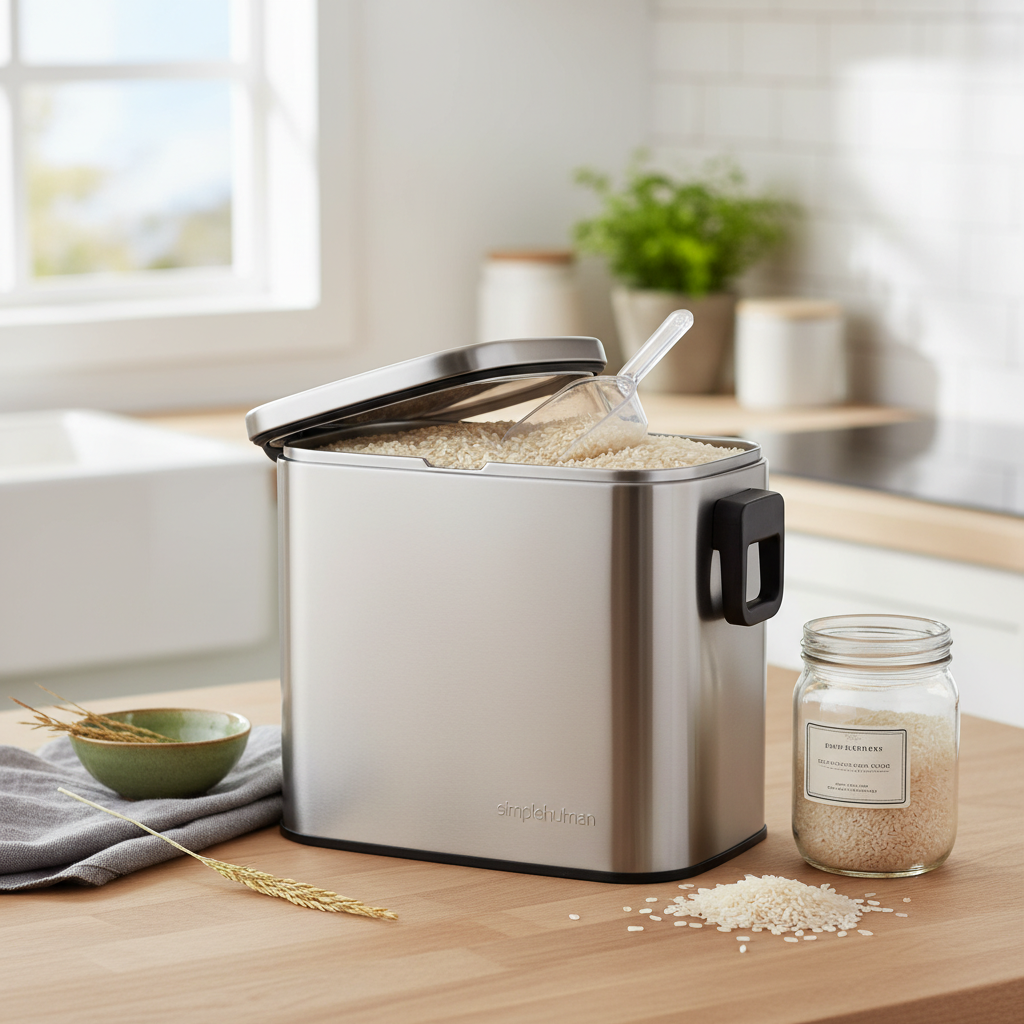
Imagine a kitchen where your rice supply never dwindles unexpectedly, where the thought of “running out” becomes a relic of the past. This isn’t science fiction; it’s the exciting promise of smart bins that automatically order rice, a concept at the forefront of kitchen innovation. As technology seamlessly integrates into our homes, the way we manage our pantry staples is on the cusp of a revolutionary transformation. This article delves into the fascinating vision of intelligent rice storage, exploring the underlying technologies that make it possible, the myriad benefits it offers, and the challenges that must be navigated as we step into this automated future.
The Evolution of Food Storage: Beyond Basic Bins
|
Our Picks for the Best Rice dispenser in 2026
As an Amazon Associate I earn from qualifying purchases.
|
||
| Num | Product | Action |
|---|---|---|
| 1 | Mity rain Rice Dispenser 20 Lbs with Moisture Absorbing Clay, Rice Storage Container with Measuring Cup, 12 L Cereal Containers Storage Airtight for Kitchen Pantry Organization |

|
| 2 | Lifewit Rice Dispenser 25 Lbs(11.3kg), Rice Storage Container Sealed Moisture Proof with Measuring Cup for Kitchen Pantry Household, BPA-Free, 1 Pack Clear |
|
| 3 | Lenwi 22-25 Lbs Rice Dispenser, Large Cereal Dry Food Storage Containers with Measuring Cup,BPA-Free Household for Kitchen Pantry Organization-Grey |
|
| 4 | Large Rice Dispenser 25Lbs, Cereal Dispenser Rice Container Food Storage Container with Measuring Cup, Cereal Containers Storage Kitchen Storage Household Rice Pet Food Holder (25LBS) |
|
| 5 | Aroma Housewares 27lbs Large Rice Dispenser, 7.25 x 16.5 x 16.5 inches, White |
|
| 6 | LUOKER Rice Dispenser,25 Lbs Rice Storage with Measuring Cup,White&Green Rice Container with One-Touch,Cereal Dispenser Storage with Lids for Rice, Corn,Soybean & Oatmeal,Airtight, Moisture Proof |
|
| 7 | Rice Dispenser, Slim Rice Storage Container for Small Space, BPA-Free Clear Dry Food Dispenser Sealed Moisture Proof, Grain Storage Bucket for Kitchen Pantry Household (Green11Lbs) |
|
| 8 | Sooyee 22 Lbs Rice Dispenser with Measuring Cup,Large Food Storage Containers for Rice, Corn,Soybean & Oatmeal,Airtight, Moisture Proof |
|
| 9 | Lifewit Rice Dispenser 25 Lbs(11.3kg), Rice Storage Container Sealed Moisture Proof with Measuring Cup for Kitchen Pantry Household, BPA-Free, 1 Pack Pink |
|
| 10 | Rice Dispenser, Rice Storage Container with Measuring Cup for Kitchen Pantry Household, Dry Food Storage Containers Airtight, Sealed Moisture Proof, Cream White 11 Lbs |
|
For generations, rice storage has been a simple affair: a bag, a jar, or a basic dispenser. While effective, these methods demand constant manual checks and mental notes to ensure a consistent supply. Today, the concept of “smart” has permeated nearly every aspect of our lives, and the kitchen is no exception. Moving beyond rudimentary containers, modern solutions are evolving to incorporate sensors, connectivity, and intelligence. A storage bin becomes “smart” in the context of automated ordering by transforming from a passive container into an active participant in your home’s inventory management, capable of communicating its status and initiating replenishment processes. This shift represents a significant leap towards a truly autonomous and efficient culinary environment.
How Smart Bins Could Automatically Order Rice
The magic behind a smart bin that automatically orders rice lies in a sophisticated interplay of cutting-edge technology. At its core, these bins would leverage a combination of sensors and internet connectivity to monitor their contents and interact with external services.
Core Technology:
- Advanced Sensors: Future smart rice bins would likely employ highly accurate weight sensors at their base or optical sensors within the container to precisely detect the current quantity of rice. These sensors continuously feed data to the bin’s internal system.
- Seamless Connectivity (IoT): Equipped with Internet of Things (IoT) capabilities, these bins would connect to your home network via Wi-Fi or Bluetooth. This connectivity allows them to transmit real-time inventory data to a central management system or a dedicated smartphone application.
- Artificial Intelligence and Machine Learning: This is where the “intelligence” truly shines. AI and machine Learning algorithms would analyze your household’s rice consumption patterns over time – how much you use, how often, and even factoring in peak usage times. This data allows the system to accurately predict when your rice supply is nearing exhaustion and optimize reorder timings. A smart pantry system, for instance, can utilize AI and machine learning techniques to learn and adjust to consumer preferences and behaviors, even automating food item purchases.
The Ordering Process:
- Customizable Thresholds: Users would set specific minimum quantity thresholds. Once the rice level drops below this pre-defined point, the smart bin triggers a reorder alert.
- Automated Shopping Lists and Direct Ordering: The system could either add “rice” to your digital grocery shopping list (accessible via a smartphone app or smart display) or, more advanced systems could directly link with your preferred online grocery services. PantryOn, for example, offers an automatic shopping feature designed to ease the grocery shopping task entirely. This allows for one-click reorders or even fully automated purchasing, sending an order directly to retailers like Amazon Fresh or Instacart. This level of automation means you’d never have to manually track household inventory or create shopping lists again.
Key Features and Capabilities of Future Smart Rice Bins
Beyond the core function of auto-ordering, a truly intelligent rice bin would integrate several features to enhance convenience and efficiency in the modern kitchen.
- Automated Inventory Tracking: The primary capability is real-time monitoring of rice levels, providing an accurate, up-to-the-minute overview of your stock. This eliminates guesswork and ensures you always know how much rice you have. Smart pantry applications can send alerts when specific items are running low.
- Expiration Date Management: While rice has a long shelf life, smart bins could potentially track purchase dates and even prompt rotation, ensuring maximum freshness for households that buy in very large bulk.
- Integrated Portion Control and Dispensing: Building on existing “smart” dispenser technologies, these bins would likely include precise portion control mechanisms, allowing users to dispense exact amounts of rice with a simple button press or voice command, minimizing waste and simplifying meal preparation.
- Seamless Smart Home Integration: Future smart rice bins would be integral to the broader smart home ecosystem. They could connect with voice assistants like Alexa or Google Assistant, allowing users to ask about rice levels or verbally approve reorders. Smart displays in the kitchen could offer a visual dashboard of pantry inventory. The RebootPoint article highlights that advanced smart pantry systems integrate with home assistants for voice or automated shopping list updates.
- Personalized Ordering Preferences: Over time, AI within the system would learn your family’s specific consumption rates, preferred brands, and even optimal delivery schedules, tailoring orders to your unique lifestyle. This personalization ensures that you receive the right type and quantity of rice, precisely when you need it.
Benefits of Automated Rice Ordering Systems
The adoption of smart bins that order rice would usher in a new era of convenience and sustainability in the kitchen, offering a multitude of benefits to consumers.
- Uninterrupted Supply: The most immediate advantage is the assurance of always having rice on hand. No more last-minute grocery runs or discovering an empty bin when preparing a meal.
- Significant Time-Saving & Unparalleled Convenience: Automated systems liberate users from the mundane tasks of manually checking inventory and compiling grocery lists. This automation saves time and eliminates the “headache” of traditional shopping.
- Reduced Food Waste: By accurately tracking consumption and ordering only when necessary, smart bins help prevent overbuying, which can lead to stale or expired rice. This precision aligns with global efforts to reduce food waste, making a tangible impact at the household level. Smart pantry features, such as inventory tracking and expiration alerts, can significantly help homeowners reduce food waste.
- Potential Cost Efficiency: Optimized ordering based on consumption patterns allows for strategic purchasing, potentially leveraging bulk discounts or avoiding premium prices for urgent, last-minute refills. Knowing supplies helps avoid overbuying, leading to cost savings in the long run.
- Enhanced Meal Planning: An accurate, real-time inventory of your rice supply simplifies meal planning. You can confidently plan dishes knowing that your essential ingredients are always available, making the cooking process smoother and more enjoyable.
Navigating the Challenges and Future Outlook
While the vision of smart bins that order rice is compelling, its widespread adoption will undoubtedly face a series of challenges that must be addressed by innovators and consumers alike.
- Technological Hurdles: Ensuring the consistent accuracy of sensors across various rice types and quantities, maintaining robust internet connectivity, and achieving seamless integration with a diverse array of online retailers and payment systems are complex technical challenges.
- Privacy and Security Concerns: Automated ordering systems collect data on household consumption habits. Safeguarding this personal data from breaches and ensuring transparent data usage policies will be paramount to building user trust.
- Initial Cost of Adoption: The advanced technology required for smart bins and pantry systems may come with a higher initial investment compared to traditional storage solutions, potentially limiting accessibility for some households.
- User Acceptance and Trust: Consumers will need to trust automation with their grocery orders. Over-ordering, wrong orders, or system glitches could erode confidence, highlighting the need for highly reliable and user-friendly interfaces.
- Ethical Considerations: As AI becomes more sophisticated, questions may arise regarding algorithmic bias in product recommendations or preferred retailers. Transparency in these systems will be crucial.
Despite these challenges, the future outlook for smart food storage, including automated rice bins, is promising. We can envision fully autonomous pantries that manage all dry goods, seamlessly integrating with meal kit services, and even offering personalized nutritional advice based on consumption patterns and dietary goals. The journey toward a truly intelligent kitchen is underway, driven by a desire for greater convenience, efficiency, and sustainability.
Conclusion
The concept of smart bins that automatically order rice is more than just a futuristic gadget; it represents a significant step towards a more intuitive and efficient home. By leveraging cutting-edge sensor technology, IoT connectivity, and artificial intelligence, these intelligent storage solutions promise to eliminate the inconvenience of running out of staples, reduce food waste, and streamline our daily lives. While challenges related to technology, privacy, and cost remain, the benefits of such automated systems – unparalleled convenience, enhanced efficiency, and greater sustainability – are undeniable. As kitchens continue to evolve, embracing these smart innovations will become increasingly vital. Are you ready for a kitchen that anticipates your needs and keeps your pantry perfectly stocked?
Frequently Asked Questions
What exactly is a “smart bin that orders rice”?
A “smart bin that orders rice” is a conceptual or emerging intelligent storage container equipped with sensors and internet connectivity. It monitors the amount of rice it holds and, when levels drop below a pre-set threshold, automatically generates a reorder request, either by adding rice to a digital shopping list or directly placing an order with an online grocery service.
How does a smart bin know when to order rice?
A smart bin uses integrated sensors, often weight or optical, to track the quantity of rice. This data is transmitted to a central system that, potentially using AI, learns your consumption patterns. Once the rice level falls below a user-defined minimum threshold, the system triggers an alert or initiates an automatic reorder process.
What are the main benefits of such a system?
The primary benefits include never running out of rice, significant time savings by eliminating manual inventory checks and shopping list creation, reduced food waste through optimized ordering, and potential cost savings from strategic purchasing. It also offers enhanced convenience and better meal planning.
Are there any privacy concerns with smart food storage?
Yes, privacy concerns exist because smart food storage systems collect data on household consumption habits. This data could include what you eat, how much, and how often. Ensuring robust data security measures, clear privacy policies, and user control over their data will be crucial for widespread trust and adoption.
When can we expect these systems to be common?
While elements of smart pantry technology (like smart shelves and inventory apps) are available today, fully integrated “smart bins that order rice” are still largely in conceptual or early development stages. As IoT technology matures and smart home ecosystems become more interconnected, widespread availability could be expected within the next 5-10 years, depending on consumer demand and technological advancements.